Multi-cancer early detection study reaches key milestone
Over 1,300 people have now taken part in a trial of a new blood test to detect multiple cancers in their very early stages.
The MODERNISED study has completed recruitment, with last participants having their blood samples taken this week.
The trial is examining ground-breaking technology that looks for signals in the blood. These indicate that the immune system is launching a response to the very first signs of cancer developing.
The blood test can also identify which of 10 different cancer types the immune system is responding to.
MODERNISED is sponsored by University Hospital Southampton (UHS) and run by the Southampton Clinical Trials Unit (SCTU).
The study is led by Professor Andy Davies. He is Director of the Southampton Cancer Research UK and NIHR Experimental Cancer Medicine Centre.
Improving early diagnosis
Dr Victoria Goss is Associate Professor and Head of Early Diagnosis Research at the SCTU.
“Reaching the end of recruitment is a hugely exciting milestone for this trial,” she said.
“Improving early diagnosis is a priority for us as researchers and for the NHS. Some cancers are extremely difficult to detect in their very early stages, when they have relatively few symptoms.
“But diagnosing cancer early means that treatment can begin sooner, increasing the chances of successful outcomes for patients, which is why developing and evaluating these tests is so important.”
'Exciting area of research'
MODERNISED is evaluating the ENLIGHTEN test, developed by biotech company Proteotype Diagnostics Ltd.
The test looks for changes in the levels of proteins which are released during an immune response to cancer.
“Multi-cancer early detection tests are a really exciting area of current early diagnosis research,” said Professor Davies.
“There are a number of these tests undergoing clinical trials at the moment. But the technology being used in the MODERNISED study is not currently being used in any other multi-cancer detection tests under investigation, and we believe that looking at these changes caused by the body’s immune system in response to cancer may be a good way to test for early signs of the disease”.
Ian and David's experience taking part
Over the past 18 months, 1,350 people have signed up to take part in MODERNISED. This includes patients with newly diagnosed cancer who are being treated on the NHS. It also includes patients with similar symptoms that are not cancer and healthy volunteers.
Ian Robinson, from Fawley in Hampshire, is one of those who took part. He decided to do so after he was diagnosed with colorectal cancer following routine screening.
“I’m delighted to participate and hopefully help improve the way things are done,” he said.
“My mother died from cancer. I now have children and five grandchildren, so yes, research is absolutely vital.
“The more cancers that can be identified as early as possible, that can benefit future generations, then it’s obviously the right way to go.”
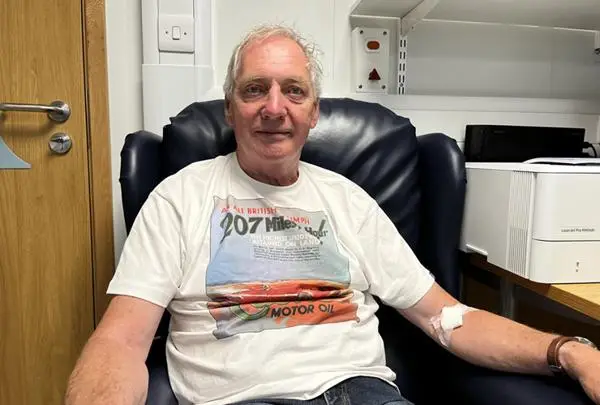
David Harrington, from Dorchester, also volunteered for the study. He did so at Dorset County Hospital when he was diagnosed with lung cancer.
“I’m pleased to be of assistance and I’m willing to help as much as I can.
“I would have thought most people would want to assist in making treatment better in the future. Otherwise, how do we get the treatment we have now for all manner of things.
“Anything that anyone can do to help, I’m up for it!”
Analysing the data
The MODERNISED trial involves patients with 10 solid tumour types. These are Bladder, Breast, Colorectal, Lung, Melanoma, Oesophageal, Ovarian, Pancreatic, Prostate, and Renal.
The study recruited participants at five hospital sites in Hampshire, Dorset and Manchester. It is funded by the NIHR Invention for Innovation programme and the Office for Life Sciences.
Hannah Warming is the Trial Manager for MODERNISED at the SCTU.
“We are incredibly grateful to all the people who have volunteered to take part in MODERNISED and to all the research teams at the hospitals involved who have been working hard to complete recruitment,” she said.
“But the work does not stop here. Our teams are now analysing all the biological data from the blood samples that have been collected from participants, to see how well the test works and whether it has the potential to become a routine part of cancer screening in the future.”