Targeted prostate cancer treatment shown to cut risk of side effects
A major study involving University Hospital Southampton (UHS) has shown a treatment for prostate cancer is just as effective as surgery or radiotherapy, with less risk of side effects.
UHS is one of just 10 centres in the country that currently offer the treatment, called focal therapy, to patients with prostate cancer. It was the third highest recruiting site to the study.
The 10-year study, led by Imperial College London, followed nearly 3,500 men who received the therapy. Just over one in 10 of them took part at UHS.
The results provide the long-term data that medical regulators had previously said was missing.
Researchers say they hope the findings may lead to focal therapy being made a standard treatment that is more widely available.
‘Low-risk treatments’
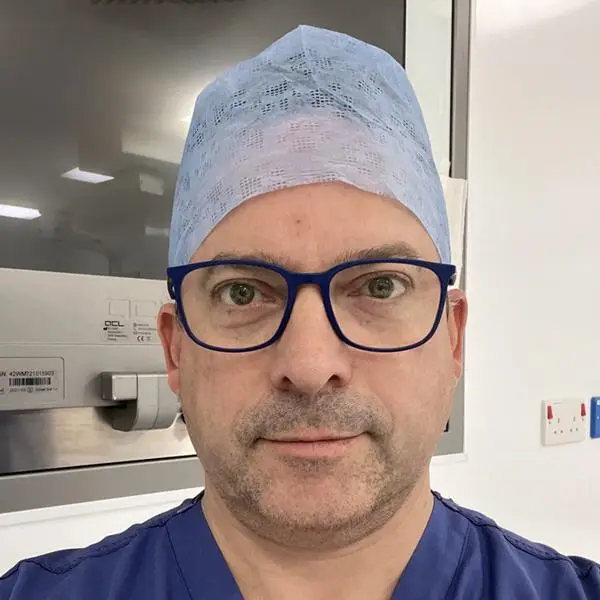
Consultant Urologist Mr Tim Dudderidge led Southampton's involvement in the study.
“Focal therapy can either be in the form of high intensity focused ultrasound, which is a heating treatment, or cryotherapy, which is a freezing treatment,” he explained.
“These are both really low-risk treatments, so the patients are less likely to have side effects, such as incontinence and erection problems, than they would do with surgery or radiotherapy.”
The health regulator NICE has not approved focal therapy as a routine treatment. This is largely because long-term evidence has been limited.
This study, supported by the National Institute for Health and Care Research (NIHR), aims to provide that evidence. The results have been published in the journal European Urology.
“The purpose of this study is to highlight that we now have ten-year long-term outcomes showing really positive success rates,” said Mr Dudderidge.
Nearly all the men who took part in the study had intermediate or high-risk prostate cancer. However, 10 years after treatment, only two had died from the disease.
These outcomes are as good as surgery or radiotherapy. Yet they come with less than half the risk of side effects such as urine leakage or loss of sexual function.
‘Compelling case’ for more centres
Joint senior author Prof Hashim Ahmed is a Consultant Urologist at Imperial College London and Imperial College Healthcare NHS Trust. He said the findings demonstrated that “focal therapy delivers excellent long-term cancer control across a broad range of patients.”
“It makes a compelling case for more centres to offer this treatment,” he added.
Focal therapy was introduced more than 20 years ago. However, at present only about 1,000 men a year in the UK receive it, despite there being up to 15,000 who could benefit.
A key reason the therapy has not been rolled out more widely to date is concern about long-term survival and whether treating only part of the prostate might lead to higher recurrence. This study suggests these fears are largely unfounded.
The therapy is not suitable for men whose cancer is in multiple parts of their prostate or has spread beyond the gland.
Rob Huxford was diagnosed with prostate cancer in 2020 when he was 44. He says he feels incredibly fortunate his doctor offered him focal therapy.
"My outcomes have been fantastic," he says. "I have no long-term issues at all, and it feels pretty unfair that this isn't offered to men across the whole country. It was the fact that I live in London that I was offered that treatment."
Last month, the government committed up to £2.8m to expand focal therapy provision in England, creating several new centres.
Health Innovation and Safety Minister, Preet Kaur Gill, said: “Our National Cancer Plan sets out our ambition to transform cancer care, and backing innovations like focal therapy is exactly how we are delivering on that promise.”
Supporting prostate cancer screening
Prostate cancer is the most common cancer in men in the UK. More than 64,000 are diagnosed each year, and about 12,000 die from the disease.
One of the barriers to a national prostate screening programme has been the concern that it will lead to more harm than good because of the side effects of treatment.
The £60m Transform trial is looking at the best way to introduce targeted prostate cancer screening. This would be done by combining rapid MRI scans with treatments that cause less harm, such as focal therapy.
All men diagnosed with prostate cancer as part of Transform will be offered focal therapy, if appropriate, to treat their disease.
The charity Prostate Cancer UK said focal therapy could help thousands of men each year avoid unnecessary side-effects. They are calling on NICE to review the evidence.
“Side effects like incontinence or sexual problems can be devastating, and this is the first long-term study that shows many men could avoid them without increasing the risk their cancer could return," said Amy Rylance from the charity.
“And it's not just important for individual men. These serious side effects are a major reason we don't yet screen for prostate cancer, and reducing them makes it far more likely we can get to a screening programme for all men sooner.”
This focal therapy trial is another key piece of the jigsaw. It could help lead to a screening programme in years to come.