Thousands thanked for taking part in life-changing research
Research leaders are thanking thousands of people whose participation in health research this past year has helped change lives and shape future care.
New figures show that over 15,000 people took part in around 400 studies last year managed by University Hospital Southampton (UHS).
The data is part of a wider report published by the National Institute for Health and Care Research (NIHR).
This shows that, across Hampshire, more than 38,000 participants took part in health and care research supported by the NIHR in the 12 months from April 2025.
'Part of the solution'
Prof Saul Faust is Health and Care Director at the NIHR South Central Regional Research Delivery Network, which supports health and care providers to deliver studies. He is also Director of the NIHR Southampton Clinical Research Facility.
“We are incredibly proud of the people in Hampshire who have stepped up to be part of the solution to some of our biggest health challenges,” he said.
“It’s great to know that Hampshire’s participants are part of a massive movement to unlock better treatments for cancer, stroke and many other diseases right here on our doorstep.”
Across England, the NIHR helped health and care organisations recruit 878,698 volunteers for 4,536 studies in the 12 months from 1 April 2025. This brings the total number of enrolments in research studies across England to more than 7.4 million since April 2020.
Studies that have recruited participants in Hampshire in 2025/26 include:
- a study investigating whether screening a newborn’s genetic sequence helps find and treat about 200 rare conditions early
- an online survey tracking the health and wellbeing of people living with cancer to discover what community support they need most
- a trial to screen people with long-term heartburn to catch early signs of oesophageal cancer. The participant swallows a small capsule on a string which dissolves in the stomach to release a tiny sponge. As it is pulled back up, it gathers cell samples from the food pipe lining to detect pre-cancerous changes
- a study to find out if informing asthma patients about the carbon footprint of different inhalers influences which they choose
Janie’s story
Janie Allen, 61, is a retired biology teacher from Odiham in Hampshire. She took part in a study into hereditary angioedema (HAE). This is a genetic condition that causes severe, painful swelling in the face, hands, feet and intestines.
“I first noticed symptoms when I was about 11, but wasn’t formally diagnosed until I was 36,” she said. “For years I’ve managed the agony of swelling, particularly in my intestines.
“It could be so painful. I was often taking strong prescription painkillers, with several hospital visits for tests trying to find out what it was.
“Once diagnosed, I took the standard medication for the condition, which helped, but I would still get minor swelling and every couple of years, a full blown attack that would be agony.”
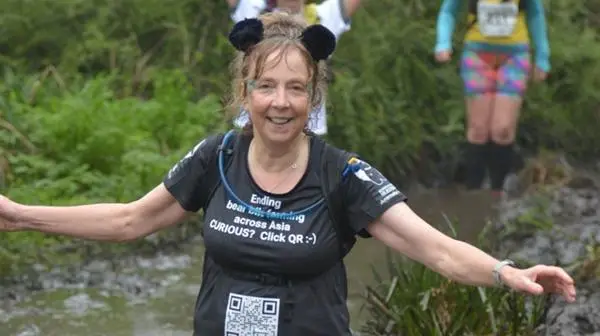
A turning point came in 2025 when Janie was offered the chance to join a clinical trial at Frimley Park Hospital, Surrey. The trial was testing a new tablet to prevent the painful and unpredictable swelling caused by HAE.
“I jumped at the chance,” Janie said. “I've benefitted from previous medical research, so this was my way of giving back. I also knew the new medication specifically targeted the defect causing my HAE, offering me hope for better control.”
The trial required Janie to take one daily tablet, alongside monthly hospital check-ups. She didn’t know if she was receiving the medication or a dummy drug, so researchers could compare the results of both.
She finished the trial in January. She has now moved into the next phase, where she is guaranteed to receive the new medication. This allows researchers to monitor its long-term safety and effectiveness.
“My standard medication was good, but I still suffered from minor attacks and a full-blown crisis every couple of years,” she said.
“I never realised how exhausted the frequent flare-ups made me. When you live with a chronic illness for so long, you forget what ‘normal’ feels like.
“Since starting the trial I’ve had no flare-ups, so no swelling and no pain. It’s been amazing. I also have so much more energy that I can run, cycle and train consistently.
“There were so many things I couldn’t do because my condition was never totally under control. But this has now changed. This year I even achieved a lifelong dream by completing a marathon over the South Downs - something I once thought was completely impossible. For the first time in my life, my body is in a state of health and consistency.”
She is now calling on residents to join around 31,000 Hampshire people who have signed up to Be Part of Research. This is an online service where people register to be contacted about taking part in studies into topics that interest them, for example diabetes and stroke.
'Incredibly grateful' to all volunteers
The NIHR figures show that 15,357 participants took part in 387 studies managed by UHS this past year.
Karen Underwood is Director of Research and Development at UHS.
She said: “We are incredibly grateful to every person who volunteers to take part in health and care research.
“Participants like Janie are helping us develop the treatments, technologies and approaches that will improve care for future generations, while giving researchers the evidence needed to tackle some of the biggest challenges facing healthcare.
“Every study relies on people willing to get involved, and their contribution is making a real difference to the future health of our communities.”
Participating in health research helps develop new treatments, improve the NHS, public health and social care and save lives.
Studies take place in hospitals, the community and the home, for example answering a questionnaire about a health condition.
People without the medical condition being studied can also take part. Researchers can then compare their results to those of people with the condition.
People aged 18 and over can search for and sign up to be contacted about studies that interest them at bepartofresearch.uk.